Revolutionizing Cross-Paper Analysis with Claude MCP and Needle
How AI-powered tools are transforming academic research and interdisciplinary collaboration
Key Takeaways
- Researchers spend up to 50% of their time on literature searches and reference management rather than actual analysis.
- Claude MCP + Needle unifies scattered academic databases into a single searchable interface with natural language queries.
- Customizable connectors automatically index sources from PubMed, Elsevier, Google Drive, and more, keeping collections current.
- Cross-disciplinary discovery becomes practical: the system surfaces connections across fields that siloed databases hide.
- The combination is especially impactful for climate science, medical research, and social sciences.
In today's academic landscape, publications proliferate at a dizzying pace, and interdisciplinary research often points the way to groundbreaking discoveries. Yet, scholars: particularly PhD candidates and faculty, frequently grapple with an overwhelming volume of articles, datasets, and technical reports scattered across different platforms. Claude MCP (Modular Content Platform), in concert with Needle, offers a comprehensive solution to these research complexities by integrating and streamlining disparate knowledge sources.
What is Claude MCP?
Claude MCP addresses one of the most pressing challenges in academia: synthesizing information from vast, scattered repositories. Instead of switching between dozens of databases, researchers can pose a single query, say, “Identify all recent studies on Bayesian inference for climate modeling,” and rapidly receive a concise set of results enriched with meaningful context.
At its core, Claude MCP operates as a sophisticated content integration layer. It gathers papers, datasets, and supporting materials into a unified resource. By automating some of the more time-consuming tasks, like cross-referencing articles or organizing bibliographies, it frees you to delve deeper into rigorous analysis and collaborative exploration.
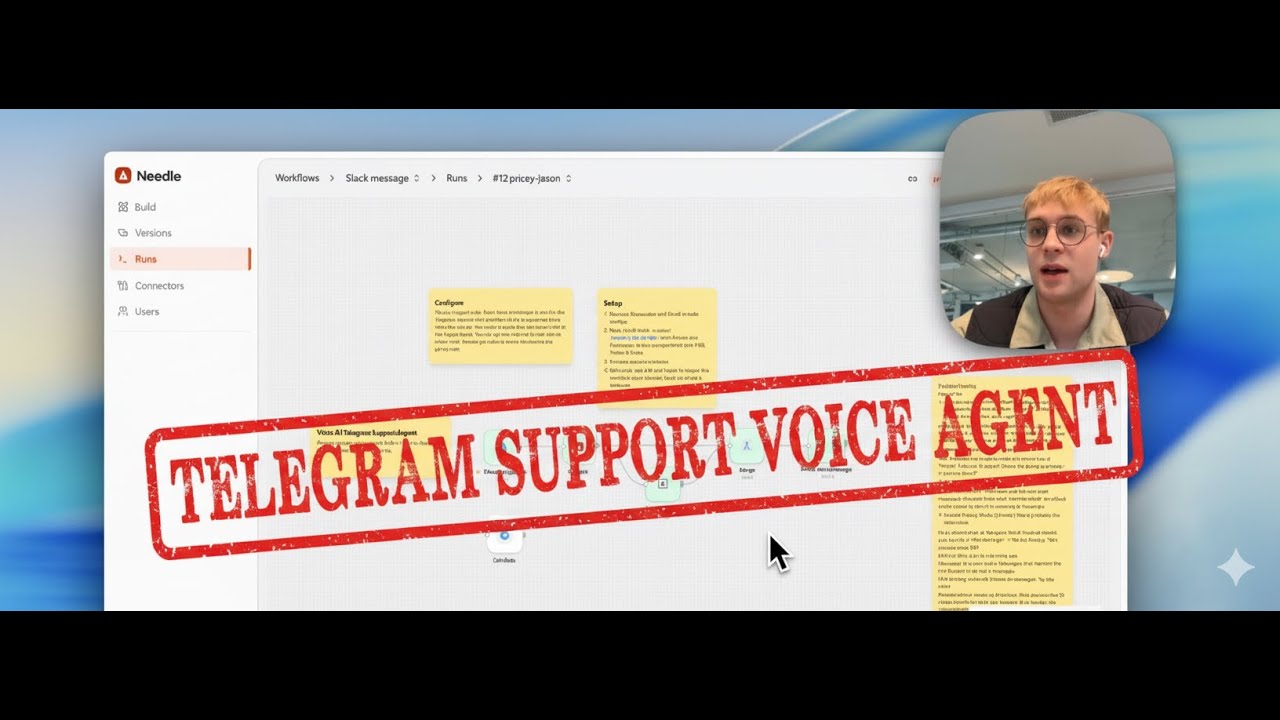
We are explaining it more in detail in this Youtube video.
The 3 Core Academic Challenges
- Disparate Information Sources - Academic literature is spread across numerous platforms that don't talk to each other or follow consistent metadata standards.
- Tedious Searches and Curation - Verifying references and assembling bibliographies can consume hours that should be spent refining experiments or drafting manuscripts.
- Missed Interdisciplinary Connections - Breakthroughs commonly emerge where fields overlap, but siloed databases prevent scholars from recognizing these critical convergences.
How Claude MCP and Needle Offer a Unified Solution
- Unified Knowledge Threads - Claude MCP “threads” research across multiple domains by highlighting shared methodologies, repeated citations, or parallel research questions. Needle then draws out the key themes to help you spot important narratives.
- Streamlined Workflows - Collecting references, formatting citations, and clustering articles by subject are automated, allowing PhD candidates and senior researchers to focus on designing robust studies.
- Customizable Connectors - Needle offers customizable connectors to index specialized archival databases, scrape frequently updated websites, or track changes in subscription-based journal repositories.
You can discover more in this Youtube video.
Traditional vs. AI-Powered Research Workflows
| Task | Traditional Approach | Claude MCP + Needle |
|---|---|---|
| Literature Search | Hours across 5-10 databases | Single natural language query |
| Cross-Referencing | Manual, error-prone | Automated with citation mapping |
| Bibliography Formatting | 30-60 min per paper | Auto-generated |
| Interdisciplinary Discovery | Rare and accidental | Systematically surfaced |
| Keeping Sources Current | Periodic manual checks | Automatic connector syncs |
Real-World Impact for Researchers
- Climate Science - Connecting models of atmospheric chemistry with policy-driven impact studies becomes more seamless, guiding collaborative research efforts on climate solutions.
- Medical Research - Aggregating data from clinical trials, biomedical engineering, and large-scale patient studies is far less time-intensive. Researchers can swiftly identify correlations and design follow-up experiments.
- Social Sciences - Historians, economists, and sociologists can merge archival materials with ongoing empirical surveys. This integrated view illuminates longitudinal patterns that might otherwise be missed.
Why This Matters Now
With the volume of scholarly publications growing exponentially, traditional approaches to literature reviews and meta-analyses are increasingly unsustainable. Grant agencies and universities are also placing added emphasis on open science and knowledge sharing. Claude MCP, supported by Needle, meets these needs head-on by:
- Harmonizing scattered data sources,
- Streamlining critical workflows,
- Illuminating cross-disciplinary possibilities with minimal manual effort.
How to Get Started with Needle for Research
- Create a Collection - Add or scrape content from sources like Elsevier, PubMed, Google Drive, Dropbox, or manually drop files in.
- Configure Connectors - Set up automatic syncing so collections stay current with the latest publications.
- Search with Natural Language - Ask questions in everyday language, and Needle retrieves and contextualizes the most relevant results.
- Share and Collaborate - Generate draft summaries or announcements from your curated collections and share with your team.
Summary
Claude MCP and Needle together transform academic research by unifying scattered databases into a single, AI-powered search layer. Researchers can replace hours of manual literature searching, cross-referencing, and bibliography formatting with natural language queries that return contextually rich results. Customizable connectors keep collections current, and the system proactively surfaces interdisciplinary connections that siloed databases hide. For PhD candidates, faculty, and research teams in climate science, medicine, and the social sciences, this combination represents a meaningful step toward more efficient, rigorous, and collaborative scholarship.