Why Vertical AI Agents Are the Future of Enterprise Software
We're witnessing a fundamental shift: vertical AI agents that are laser-focused on specific industries are potentially 10x more valuable than generic solutions.
Key Takeaways
- Vertical AI agents are domain-specific systems that can be 10x more valuable than the generic SaaS tools they replace, according to Y Combinator.
- Specialization wins: an AI agent trained exclusively on financial compliance data is exponentially more effective than any generalist solution.
- The primary challenge is data, not technology—success requires domain-specific training data, proprietary datasets, and continuous feedback loops.
- Healthcare, financial services, and customer service are seeing the earliest and most impactful vertical AI transformations.
- A unified knowledge architecture that connects disparate data sources in real-time is the foundation for effective vertical AI agents.
We're witnessing a fundamental shift in how enterprises think about AI. Gone are the days when companies settled for generic, broad-stroke solutions that sort of worked across multiple use cases. Today's smart organizations are betting on something far more powerful: vertical AI agents.
These aren't your typical chatbots or general-purpose AI assistants. Vertical AI agents are laser-focused, domain-specific systems built to excel at particular tasks within specific industries. And they're not just incrementally better than what came before: they're potentially 10x more valuable than the SaaS tools they're replacing.
The SaaS Playbook, Reimagined
Remember when SaaS revolutionized business software? It started with AJAX in 2004, moved computing to the cloud, and created billion-dollar companies by solving general software needs. Vertical AI agents are following a similar trajectory, but with one key difference: they're not just digitizing processes, they're making them genuinely intelligent.
While traditional SaaS gave us tools we had to learn to operate, vertical AI agents feel more like expert colleagues who understand the nuances of your business. Instead of forcing your team to adapt to software constraints, these agents adapt to your workflows, your data, and your industry's unique challenges.
Why Specialization Wins
The magic happens when AI gets really, really good at one thing. A vertical AI agent built for financial compliance doesn't waste processing power trying to understand healthcare workflows or manufacturing logistics. It's trained exclusively on financial data, regulations, and use cases, making it exponentially more effective than any generalist solution.
| Dimension | Generic AI / Horizontal SaaS | Vertical AI Agents |
|---|---|---|
| Domain Knowledge | Broad but shallow | Deep, industry-specific expertise |
| Accuracy | Moderate—prone to generic responses | High—trained on domain-specific data |
| Workflow Fit | Users adapt to the tool | Agent adapts to existing workflows |
| Competitive Moat | Easily replicated features | Proprietary data & domain models |
| Value Multiplier | Incremental improvement (1.5–2x) | Transformative impact (up to 10x) |
| Autonomy Level | Requires significant human oversight | Can handle complex tasks with zero oversight |
This specialization creates what Y Combinator calls "10x companies": businesses that don't just improve on existing solutions but fundamentally transform how work gets done. When an AI agent can handle complex compliance reporting with zero human oversight, or automatically detect fraud patterns that would take teams weeks to identify, you're not just saving time: you're unlocking entirely new capabilities.
The Data Challenge (And Why Most Companies Get It Wrong)
Here's where most organizations stumble: they think building vertical AI agents is primarily a technology problem. It's actually a data problem.
The most sophisticated AI architecture in the world won't help if your agent is trained on generic, irrelevant data. Success requires three critical data foundations:
- Domain-specific training data that reflects your industry's unique challenges and terminology
- Proprietary datasets that give your agents insights competitors can't replicate
- Continuous feedback loops that help agents learn from real-world performance and improve over time
Where We're Seeing Early Wins
Vertical AI agents are already transforming several key sectors:
Healthcare: Agents that integrate deeply with electronic health records, automate appointment scheduling, and support diagnostic processes by analyzing patient histories. Instead of forcing doctors to navigate multiple systems, everything happens through natural language interactions.
Financial Services: Advanced agents that continuously monitor transactions, detect fraud patterns, and automate regulatory compliance reporting. These systems don't just flag anomalies: they understand context and can make judgment calls that previously required human expertise.
Customer Service: Agents that handle complex inquiries by drawing from comprehensive product knowledge, order history, and customer preferences. They're not following decision trees, they're having genuine conversations that resolve issues efficiently.
The Knowledge Architecture Problem
Building effective vertical AI agents isn't just about having good data; it's about making that data instantly accessible and contextually relevant. This is where most organizations hit a wall. Their information lives in silos: customer data in one system, product documentation in another, operational procedures scattered across various platforms.
Successful vertical AI implementations require a unified knowledge architecture that can:
- Connect disparate data sources in real-time
- Understand context across different types of information
- Learn from interactions to improve future responses
- Scale seamlessly as data volumes grow
What This Means for Your Organization
If you're still thinking about AI as a nice-to-have feature or a chatbot add-on, you're missing the bigger picture. Vertical AI agents represent a fundamental shift in how work gets done; and companies that don't adapt risk being left behind.
The question isn't whether your industry will be transformed by vertical AI agents. It's whether you'll be leading that transformation or scrambling to catch up. Here's how to get started:
- Audit your processes: Identify the most repetitive, knowledge-intensive tasks in your organization.
- Assess domain expertise bottlenecks: Look for areas where specialized knowledge creates significant value but is currently limited by human capacity.
- Evaluate your data landscape: Map where critical information lives and identify integration opportunities.
- Choose a knowledge infrastructure partner: Select a platform that unifies your data sources and makes them accessible to AI systems.
How Needle Powers Vertical AI Success
This is where Needle becomes essential. Building effective vertical AI agents requires more than just connecting to your data sources: it requires a platform that can unify, contextualize, and make your organizational knowledge instantly accessible to AI systems.
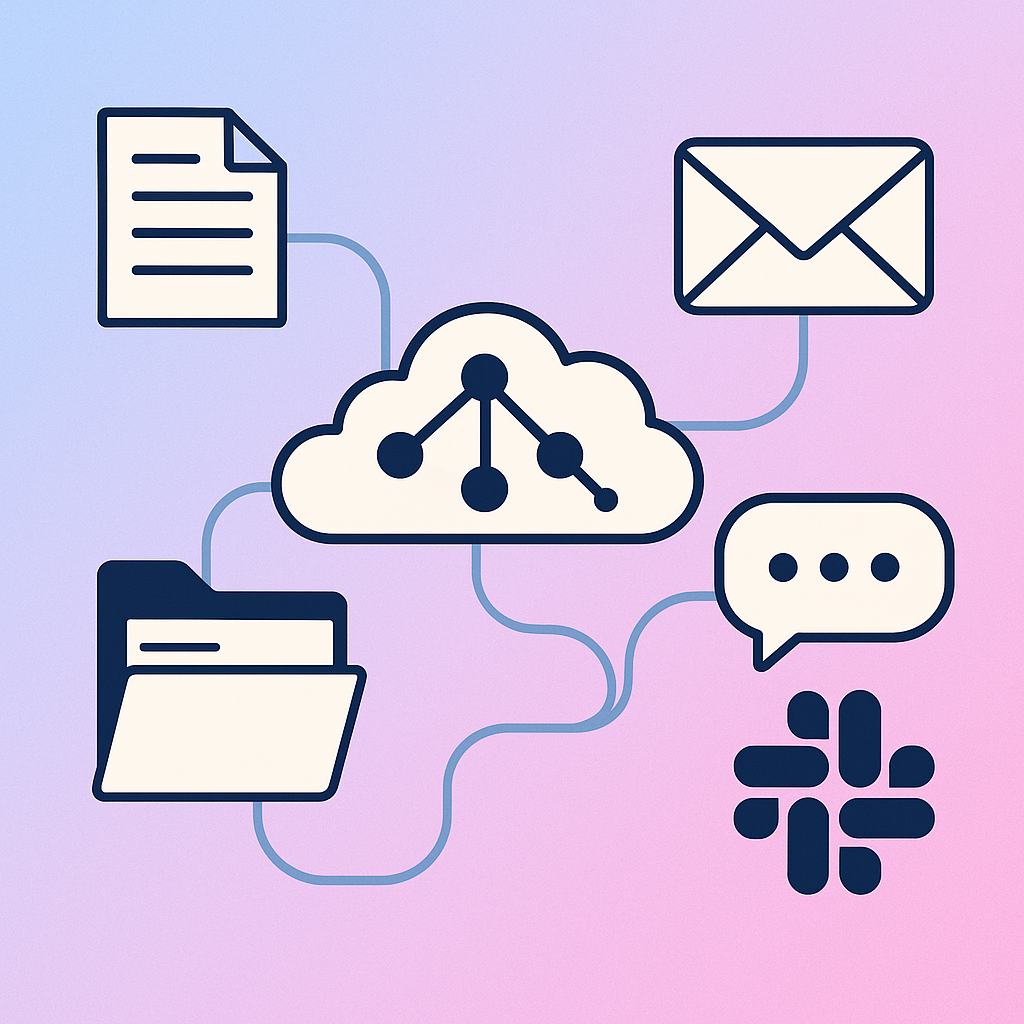
Needle's knowledge management platform solves the core challenge that makes or breaks vertical AI implementations: creating a unified, searchable, and contextually rich knowledge base that your AI agents can leverage in real-time. Whether your critical information lives in Slack conversations, GitHub repositories, Notion databases, or email threads, Needle connects it all into a coherent system that your vertical AI agents can understand and act upon.
Summary
Vertical AI agents represent the next major evolution in enterprise software—moving from generic, broad-stroke SaaS tools to domain-specific systems that deliver up to 10x more value. The key success factors are not technical but data-driven: domain-specific training data, proprietary datasets, and continuous feedback loops. Industries like healthcare, financial services, and customer service are already seeing transformative results. The critical infrastructure requirement is a unified knowledge architecture that connects disparate data sources in real-time. Organizations that build this foundation today—using platforms like Needle—will lead their industries; those that wait will be playing catch-up.
Ready to build vertical AI agents that actually understand your business? Needle provides the knowledge infrastructure that makes specialized AI systems possible. Start connecting your data today.