Rethinking Change Management in the AI Era
Tool sprawl and fragmented knowledge define modern organizations. Effective change management through knowledge accessibility drives transformation.
Key Takeaways
- The average enterprise uses 130+ SaaS applications, creating tool sprawl that fragments knowledge and reduces productivity.
- Employees spend up to 3.6 hours per day searching for information across disconnected systems.
- Effective change management requires three pillars: clarity of purpose, distributed ownership, and progressive adoption.
- Poorly managed change initiatives can increase employee turnover by 12% and reduce collaboration across teams.
- Knowledge accessibility - not more tools - is the foundation of successful organizational transformation in the AI era.
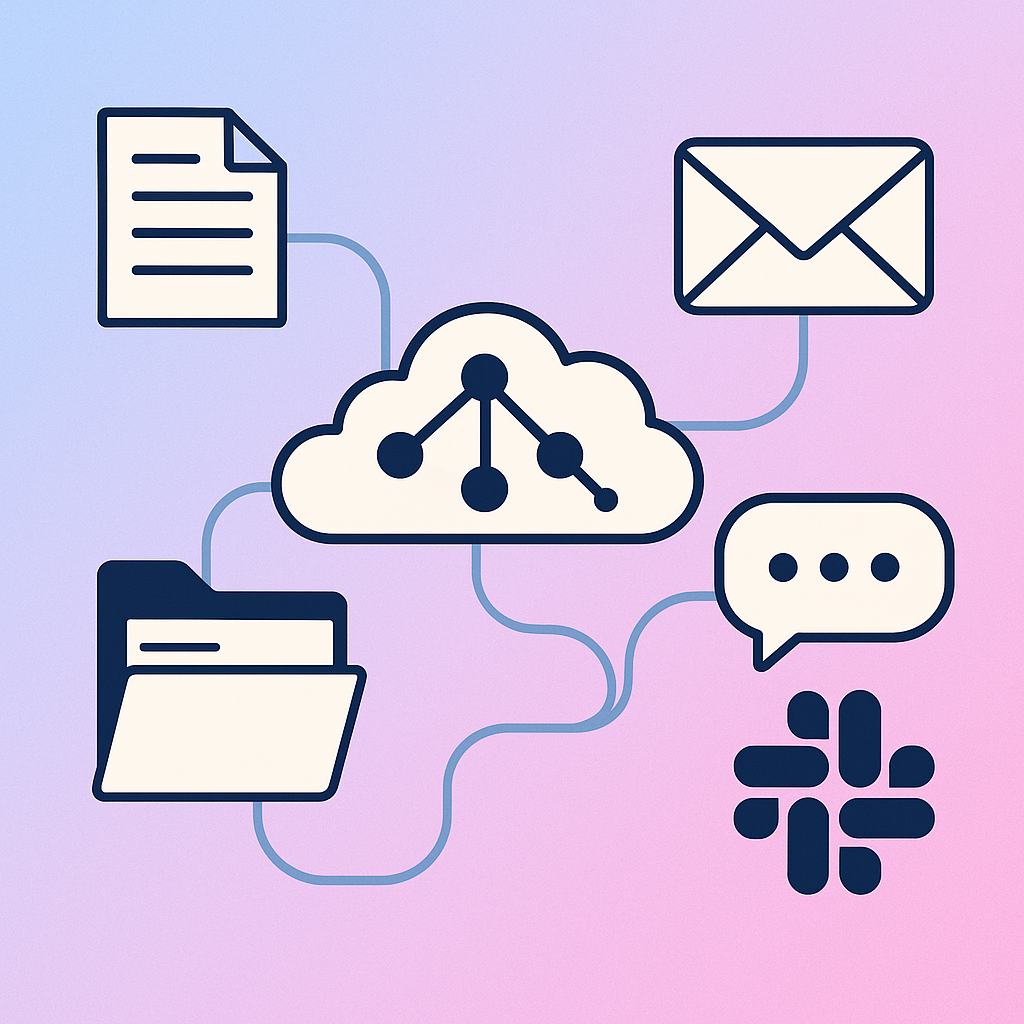
The average company manages 130+ SaaS applications, creating parallel workflows, duplicated processes, and significant inefficiencies.
Teams experience:
- Difficulty identifying a single source of truth
- Up to 3.6 hours per day spent searching for information
- Lower engagement due to context switching and unclear processes
Digital overload isn't simply a productivity concern. It directly impacts organizational alignment, operational costs, and employee retention.
The Role of Change Management
Change management functions as organizational infrastructure: it helps teams adopt practices, establish knowledge flows, and sustain operational consistency.
Effective change management addresses three key areas:
- Step 1 - Clarity of purpose: Teams need a clearly articulated "why." Without this, adoption remains superficial and short-lived.
- Step 2 - Distributed ownership: Champions across departments drive momentum, embedding adoption beyond leadership mandates into daily workflows.
- Step 3 - Progressive adoption: Early visible successes build confidence, demonstrate value, and reduce resistance across the organization.
Traditional vs. Knowledge-Driven Change Management
| Dimension | Traditional Approach | Knowledge-Driven Approach |
|---|---|---|
| Information access | Siloed across 10+ tools | Unified, searchable single source |
| Adoption speed | Slow (months-long rollout) | Fast (integrated into existing workflows) |
| Employee friction | High (new tool to learn) | Low (works within current tools) |
| Knowledge currency | Outdated quickly | Continuously updated |
| Measurability | Hard to track ROI | Search analytics, adoption metrics |
Practical Considerations for Leaders
- Knowledge accessibility: Is information consistently available and up to date across all teams?
- Integration with workflows: Does technology complement processes rather than disrupt them?
- Adoption support: Are templates, training, and clear guidelines available to minimize friction?
- Cultural alignment: Does change reflect how employees prefer to work day-to-day?
Poorly managed change initiatives increase turnover, limit collaboration, and create long-term inefficiencies that compound over time.
Implementing Change Effectively
Organizations achieving sustainable results typically follow this process:
- Step 1: Begin with well-defined use cases tied to measurable pain points (e.g., reduce information search time by 50%).
- Step 2: Identify champions who bridge technical knowledge and operational practice in each department.
- Step 3: Provide structured pathways with clear milestones and success criteria.
- Step 4: Communicate both short-term benefits and long-term vision consistently across all levels.
How Needle Supports Knowledge-Driven Change
Change succeeds when employees access the right information at the right time. Needle makes organizational knowledge conversational and searchable across existing systems.
Rather than adding another tool, Needle integrates with current documentation, policies, and workflows- reducing friction, enabling faster adoption, and supporting resilient change.
Summary
Tool sprawl and fragmented knowledge define modern organizations, with the average enterprise managing 130+ applications. Effective change management in the AI era isn't about adding more tools - it's about making existing knowledge accessible, searchable, and actionable. By focusing on clarity of purpose, distributed ownership, and progressive adoption, leaders can drive transformation that sticks. Platforms like Needle support this by unifying knowledge across existing systems without forcing teams to change how they work.
Interested in reducing digital overload and driving effective organizational change? Explore how Needle can help consolidate knowledge, streamline adoption, and maintain a single source of truth.